
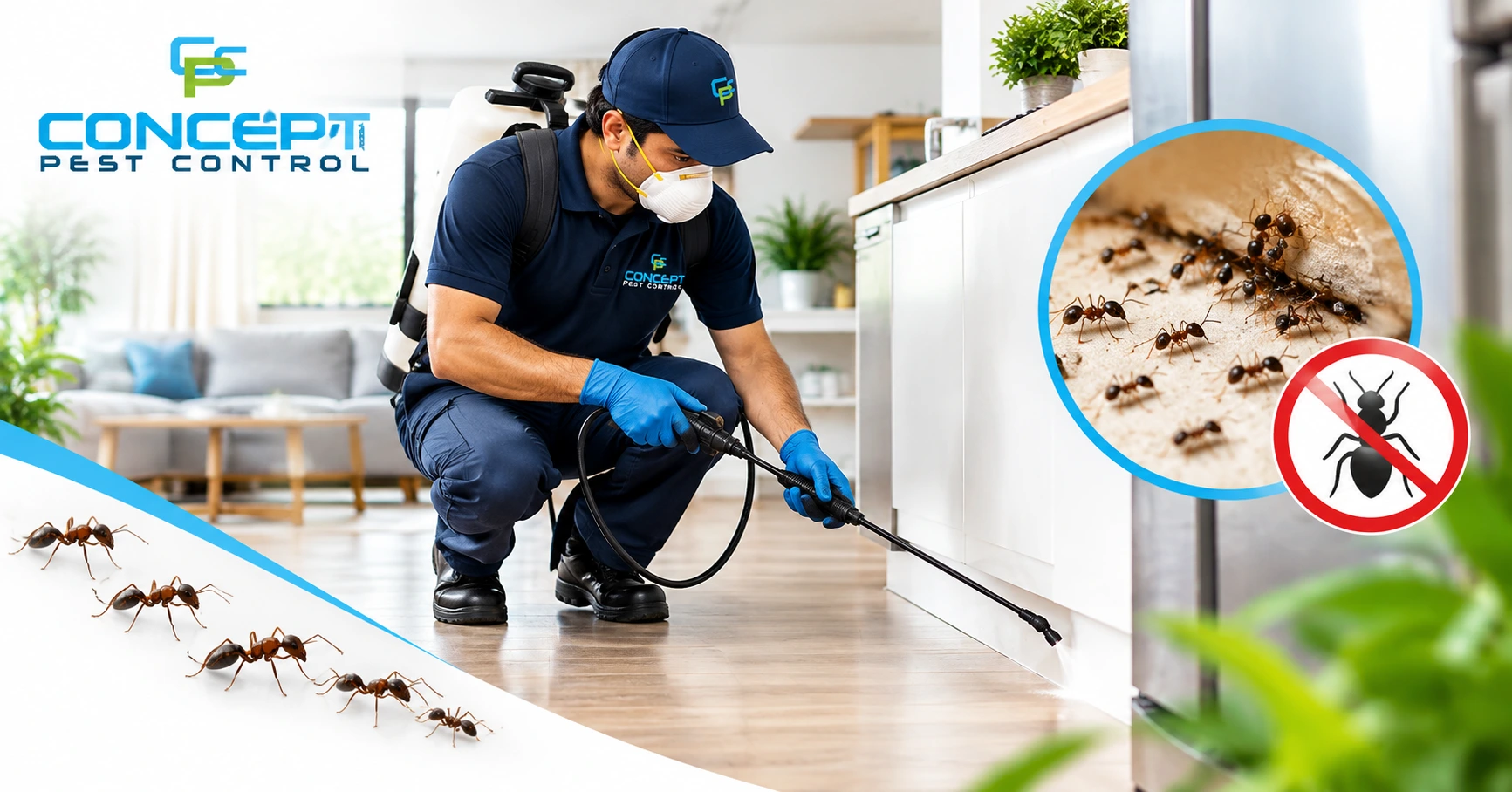
Seeing a few ants on the kitchen counter might not seem like a big deal. But an ant infestation rarely stays small. Ants enter homes looking for food, water and shelter, and once a trail is established, more workers follow. Behind those visible ants is usually a colony that can contain thousands of insects. The real challenge is that wiping away the ants you can see does not address the nest. Effective ant control means finding what attracts ants, blocking how they get in, and treating the colony rather than just the workers. In this guide, you will learn what an ant infestation is, what causes it, how to recognize the signs, how to get rid of ants step by step, which methods work best, and when to call a professional.
What Is an Ant Infestation?
An ant infestation is an established, ongoing presence of ants in or around a building, usually involving a colony nearby and repeated ant activity over days or weeks. Finding a single ant is usually a scout looking for food. An infestation is different. You see ants repeatedly, in numbers, often following the same path to a food or water source.
The difference matters because the treatment changes:
- Occasional ants: Clean up, remove the attractant and monitor.
- Established infestation: Locate the trail, use appropriate baits or treatments, seal entry points and address the nest.
What Causes Ant Infestations in Homes?
Ants are drawn to accessible food, moisture and shelter. Crumbs, spills, open food, leaks, cracks in walls and vegetation touching the building are the most common reasons an ant infestation in a home begins.
Understanding the cause helps you stop ants from returning. Common causes include:
- Food crumbs and spills: Sugary residue, grease and pet food all attract foraging ants.
- Open food containers: Unsealed sugar, cereal, honey and snacks are easy food sources.
- Standing water and moisture: Leaking pipes, damp cabinets and wet areas draw ants, especially in dry weather.
- Cracks and gaps: Small openings around doors, windows, pipes and foundations act as entry points.
- Poor sanitation: Overflowing bins, dirty dishes and unwashed surfaces support ant activity.
- Outdoor vegetation touching the building: Branches, shrubs and vines can serve as bridges to your walls and roof.
- Weather and seasonal changes: Heavy rain, heat or drought can push ants indoors in search of shelter or water.
In most homes, several of these factors combine, which is why a single fix often does not solve the problem.
Common Types of Ants Found in Homes
Knowing the common types of ants helps you choose the right approach, because different species respond differently to treatment. Species vary by region, so confirm identification locally if you are unsure. Common household ants include:
- Pavement ants: Often nest in soil beneath pavement, slabs and foundations and enter through cracks.
- Carpenter ants: Nest in moist or damaged wood and may be associated with structural damage.
- Odorous house ants: Known for a distinctive smell when crushed; they often nest in wall voids or soil and are attracted to sweet foods.
- Argentine ants: Form large colonies with many trails and may nest in multiple locations.
- Fire ants: Build mounds outdoors and can sting, so avoid disturbing them.
- Pharaoh ants: Tiny ants that can nest in warm, hidden spaces and are difficult to control.
If you cannot identify the species, take a clear photo or save a sample and ask a pest control professional or local extension service.
What Are the Signs of an Ant Infestation?
The main signs of an ant infestation are visible ant trails, large numbers of ants, repeated activity in the same areas, ants near food, nests, winged ants indoors and, with some species, wood damage or sawdust-like debris.
Watch for these signals:
- Visible ant trails: Lines of ants moving between a nest and a food source along walls, baseboards or counters.
- Large numbers of ants: Many ants at once suggests an active colony nearby.
- Ant nests: Mounds of soil outside, or small piles of debris near walls and cracks.
- Repeated ant activity: Ants return soon after cleaning.
- Ants around kitchens and food storage areas: Pantries, sinks, trash cans and pet bowls are common hot spots.
- Winged ants: Swarmers indoors can indicate a mature colony nearby or inside the structure.
- Damage associated with certain species: Carpenter ants may leave coarse sawdust-like material called frass near wood, and hollow-sounding wood can indicate galleries.
If you notice multiple signs, treat it as an established problem and take action.
How to Get Rid of Ants in Your Home
To get rid of ants, identify the species, remove food and water sources, clean trails, seal entry points, place suitable baits, monitor activity and address the nest. Combining steps works better than relying on a single method.
Follow this step-by-step approach to ant infestation treatment:
- Identify the ant species if possible. Look at size, color and behavior. This helps you choose the right bait and tells you whether wood damage is a concern.
- Find and remove food sources. Store food in sealed containers, clean crumbs and wipe sticky residue. Pay attention to pet food and trash.
- Clean affected areas. Wash ant trails with soapy water to remove the scent trails ants use to navigate. Cleaning alone will not remove the colony.
- Seal entry points. Use caulk or appropriate sealant around windows, doors, baseboards and pipes. Follow the trail to locate where ants enter.
- Remove moisture sources. Repair leaks, dry sinks and improve ventilation in damp areas.
- Use appropriate ant baits or control products. Place bait stations along active trails and follow label instructions carefully, especially around children and pets.
- Monitor ant activity. Check bait stations and trails over several days. Ant activity may increase at first as foragers feed on bait.
- Address the colony or nesting area. Follow trails to the nest where safe. If you cannot locate or reach it, professional help may be needed.
Remember that this is a process, not a one-time fix.
What Are the Best Ways to Eliminate Ants?
The best way to eliminate ants is usually a combination of baits to reach the colony, sanitation and sealing to remove attractants and entry points, and professional pest control for persistent or hard-to-find infestations.
Each method has strengths and limits:
Ant Baits
Baits contain a slow-acting ingredient mixed with an attractive food. Foraging ants carry it back to the nest, where it can affect other ants. Baits can be effective for reaching the colony, but results depend on the species and placing them correctly. Avoid spraying near baits, as this can disrupt feeding.
Targeted Treatments
Labeled products applied to trails, nest entrances or entry points can reduce ant activity. They can work quickly on visible ants but may not reach the whole colony. Always follow label directions and keep products away from children and pets.
Sanitation and Prevention
Removing food, water and shelter makes your home less attractive. This is essential for long-term ant control, but it does not eliminate an existing colony on its own.
Sealing Entry Points
Sealing cracks and gaps limits how easily ants move in. It is a valuable preventive step, but ants may find other routes if a nest is inside wall voids.
Professional Pest Control
Professional ant extermination services can identify the species, locate nests and choose suitable treatments. Professionals may have access to products and methods not sold to consumers. The tradeoff is cost, and results still depend on addressing conditions that attract ants.
Do Natural Remedies Get Rid of Ants?
Natural ant control methods may discourage ants or remove scent trails temporarily, but most are not proven to eliminate a colony. They work best as a supplement to cleaning, sealing and bait, not a replacement.
Popular household methods include:
- Soap and water: Cleaning trails with soapy water removes scent markers and can kill ants it contacts. The colony usually remains.
- Vinegar solution: Often used to wipe surfaces and disrupt trails. It may deter ants briefly, but results vary and it does not address the nest.
- Citrus peels, peppermint oil or cinnamon: Some people use these as barriers. Evidence of lasting effectiveness is limited, and ants may simply move around them.
- Diatomaceous earth: A fine powder that can affect insects that crawl through it. It must stay dry, and food-grade versions are generally chosen for home use. Avoid creating dust that can be inhaled.
- Borax-based baits: Some homemade baits use borax and sugar. These can be harmful to children and pets if misused, so consider commercial bait stations designed to keep the bait contained.
Treat natural remedies as temporary tools. If ants keep returning, you likely need to treat the colony or fix the underlying cause.
How to Prevent Ants From Coming Back
To prevent ants in the house, store food in sealed containers, clean spills quickly, keep trash covered, fix leaks, seal cracks, trim vegetation away from the building and inspect entry points regularly.
Infestation prevention is mostly about consistent habits:
- Store food properly: Use airtight containers for sugar, flour, cereal and pet food.
- Clean spills quickly: Wipe counters, sweep floors and rinse dishes promptly.
- Keep bins sealed: Use tight-fitting lids and empty them often.
- Fix leaks: Repair dripping pipes, faucets and condensation problems.
- Reduce moisture: Ventilate bathrooms and kitchens, and dry wet areas.
- Seal cracks and gaps: Check foundations, window frames, door thresholds and utility entry points.
- Trim vegetation near the property: Keep branches and shrubs from touching walls and roofs.
- Regularly inspect common entry points: Look for new trails after rain or seasonal changes.
Prevention reduces the likelihood of ants returning, though it cannot guarantee they will never enter.
When Should You Call a Professional Pest Control Service?
Call a professional ant pest control service when the infestation keeps returning, involves large numbers of ants, appears in multiple rooms, cannot be traced to a nest, may involve structural damage, or DIY methods have failed.
Consider professional ant control in these situations:
- The infestation keeps returning: Repeated activity suggests the colony has not been eliminated.
- There are large numbers of ants: A heavy presence points to a mature or multiple colonies.
- The nest cannot be located: Nests may be inside walls, under slabs or in other hidden areas.
- Ants are appearing in multiple rooms: This can indicate widespread activity or several trails.
- There may be structural damage: Carpenter ants or moisture-damaged wood need prompt inspection.
- DIY methods have not worked: If baits and cleaning have not helped after consistent effort, expert help may save time.
- The property has children or pets: Treatment may need careful planning to limit exposure.
A qualified provider can inspect your property, identify the species and recommend a plan. Ask what products they use, how they will address the nest and what follow-up is included.
How Long Does It Take to Get Rid of an Ant Infestation?
It can take anywhere from a few days to several weeks, or longer in difficult cases. The timeline depends on the ant species, colony size, nest location, property conditions and treatment method.
Several factors influence how long ant extermination takes:
- Species: Some ants respond quickly to bait, while others are harder to control.
- Colony size: Larger or multiple colonies take longer to reduce.
- Nesting location: Nests inside walls or underground are harder to reach.
- Property conditions: Ongoing food and moisture sources can prolong activity.
- Treatment method: Baits work gradually, while targeted treatments may reduce visible ants faster but not always eliminate the colony.
You may see more ants at first when baiting begins, as foragers collect the bait. If activity continues beyond a couple of weeks, review your approach or consult a professional.
Frequently Asked Questions
How do I get rid of an ant infestation in my house?
Identify the ants, remove food and water sources, clean trails, and seal entry points. Place suitable bait stations along active trails and monitor results over several days. If you cannot find the nest or ants keep returning, contact a professional ant pest control service.
What is the fastest way to eliminate ants?
Wiping trails with soapy water and using targeted products can reduce visible ants quickly, but this usually does not eliminate the colony. Baits are slower but can reach the nest. The most effective approach combines quick cleanup, baiting, sealing entry points and removing attractants.
Why do I keep getting ants in my home?
Ants return when attractants remain or the colony has not been eliminated. Common reasons include accessible food, moisture, unsealed entry points, nearby nests and vegetation touching the house. Treating only visible ants without addressing these causes often leads to repeat infestations.
How can I find where ants are coming from?
Follow ant trails during active periods, watching walls, baseboards, windows, pipes and outdoor foundations. Place a small bait near the trail and observe where ants carry it. Look for nests in soil, mulch or damp wood. If the trail disappears into a wall, consider professional help.
Do ant baits actually eliminate the colony?
Baits can reduce or eliminate colonies when foraging ants carry the slow-acting bait back to the nest. Success depends on species, bait type, correct placement and patience. Avoid spraying or cleaning near bait stations, and replace baits as directed.
How can I prevent ants from coming back?
Store food in sealed containers, clean spills promptly, cover trash, fix leaks, and reduce moisture. Seal cracks and gaps, trim vegetation away from the building, and inspect entry points regularly. Prevention lowers the risk of ants returning but cannot guarantee they will not come back.
When should I call professional ant pest control?
Call a professional when ants keep returning, appear in large numbers or multiple rooms, or when you cannot locate the nest. Seek help if you suspect structural damage, if DIY efforts have failed, or when children or pets make treatment planning more important.
How long does it take to get rid of an ant infestation?
It can take from several days to a few weeks, and longer for large or hidden colonies. Timing depends on the ant species, colony size, nest location, property conditions and treatment method. Baits work gradually, so allow time and monitor activity before changing your approach.