
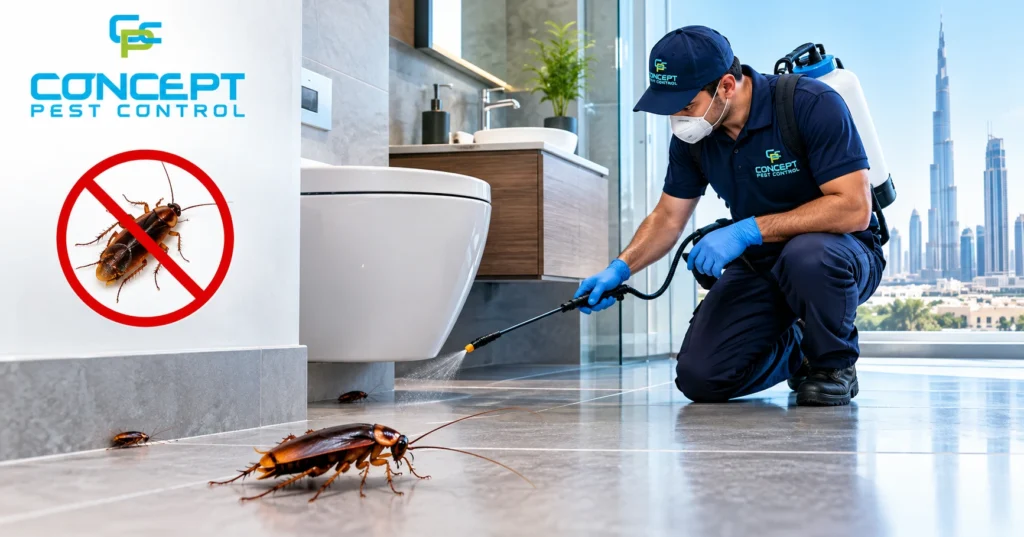
Bathroom cockroaches can be difficult to manage because bathrooms provide many of the conditions these pests need: moisture, warmth, water, shelter, and access to plumbing spaces. In Dubai, indoor bathrooms can remain warm for much of the year, while condensation, leaks, poor ventilation, or damp areas may create additional opportunities for cockroach activity.
If you are dealing with bathroom cockroaches in Dubai, the most effective approach is to identify where they are entering or hiding, remove moisture sources, improve sanitation, seal access points, and use suitable pest-control methods. Simply killing the cockroaches you can see may not solve the underlying problem.
This guide explains why cockroaches appear in bathrooms, the signs of an infestation, the possible connection with drains, practical DIY measures, and situations where professional treatment may be appropriate. It also covers long-term prevention so that homeowners, tenants, property managers, and businesses can better manage bathroom pest problems.
Why Are Cockroaches Commonly Found in Dubai Bathrooms?
Cockroaches are attracted to environments that provide water, warmth, food residue, and protected spaces. Bathrooms can offer several of these conditions at the same time.
Common factors that may contribute to cockroach activity include:
- Moisture: Wet floors, damp corners, and condensation can provide access to water.
- Leaking plumbing: Small leaks beneath sinks or around toilets can create persistent dampness.
- Poor ventilation: Limited airflow can allow humidity to remain inside the bathroom.
- Standing water: Water left around fixtures or on floors can attract pests.
- Organic residue: Soap residue, hair, skin particles, and other organic material can contribute to available food sources.
- Drains and plumbing: Openings and gaps around plumbing fixtures can provide potential access routes.
- Cracks and crevices: Small gaps behind cabinets, walls, tiles, and fixtures can provide hiding places.
- Warm indoor conditions: Cockroaches generally prefer warm environments and can remain active indoors.
A bathroom does not need to be visibly dirty for cockroaches to appear. Even a well-maintained bathroom can experience pest activity if there are concealed entry points, plumbing problems, or favorable environmental conditions.
Common Types of Cockroaches Found in Bathrooms
Different cockroach species have different behaviors, sizes, and preferred hiding locations. Identifying the type of cockroach can help determine the most appropriate control strategy.
Small Cockroaches in Bathroom
Finding small cockroaches in bathroom areas does not necessarily mean that the infestation is minor. Small cockroaches may be immature nymphs, and repeated sightings can indicate that cockroaches are reproducing somewhere nearby.
Look carefully around:
- Sink cabinets
- Pipe connections
- Behind toilets
- Floor and wall gaps
- Bathroom storage areas
- Drain surroundings
- Dark spaces beneath fixtures
If you repeatedly see small cockroaches rather than an isolated individual, investigate the surrounding area for additional signs of activity.
German Cockroaches in Bathroom
German cockroaches in bathroom environments can be particularly troublesome because they are small, quick-moving insects that can hide in narrow cracks and protected spaces. They are commonly associated with warm, humid areas where food and water are accessible. German cockroaches reproduce relatively quickly, so early detection is important.
They may hide around plumbing fixtures, cabinets, appliances, wall voids, and other protected locations. Because they can remain hidden during the day, seeing only a few insects does not necessarily indicate that only a few are present.
Drain Cockroaches
The term “drain cockroaches” is often used for cockroaches noticed around bathroom drains or plumbing areas. However, seeing a cockroach near a drain does not automatically mean the drain is the source of the infestation.
Cockroaches may move around plumbing openings, gaps, drainage areas, wall voids, and other concealed spaces. Inspecting the entire bathroom and nearby areas is therefore more useful than focusing only on the drain.
Cockroach Infestation Signs to Look For
Recognizing cockroach infestation signs early can make control easier. Look for more than just live insects.
Important signs include:
- Live cockroaches, especially repeated sightings
- Dead cockroaches
- Small dark droppings
- Cockroach egg cases
- Shed skins or body parts
- Unpleasant or musty odors
- Cockroaches appearing repeatedly at night
- Cockroaches hiding around pipes and cabinets
- Nymphs or very small cockroaches
- Increasing sightings over several days or weeks
Cockroaches are primarily active at night, so nighttime sightings are common. Seeing cockroaches during daylight can sometimes occur when activity is substantial or when their hiding areas have been disturbed, but daylight activity alone is not a reliable measure of infestation severity.
A combination of repeated sightings, droppings, egg cases, and nymphs provides stronger evidence that a bathroom cockroach infestation may be established.
Why Do Cockroaches Come From Bathroom Drains?
Cockroaches may be seen around drains because plumbing and drainage areas can provide moisture, shelter, and potential access points. However, cockroaches coming from drains is only one possible explanation for bathroom sightings.
Potential contributing factors include:
- Moisture around drain openings
- Poorly sealed drain areas
- Gaps surrounding pipes
- Cracks near bathroom fixtures
- Organic buildup
- Access points around plumbing
- Connected drainage or sewer infrastructure
A cockroach seen near a drain could have entered through the drainage system, moved from another part of the property, or emerged from a nearby crack or plumbing gap. For this reason, effective control should involve inspecting the bathroom as a whole. Sealing gaps, correcting plumbing problems, maintaining drains, and reducing moisture can help reduce potential access and hiding areas.
How to Get Rid of Bathroom Cockroaches in Dubai
Getting rid of cockroaches requires more than treating the insects that are visible. The following process can help identify and address the conditions supporting their activity.
1. Identify Where Cockroaches Are Hiding
Start by inspecting dark and protected locations. Check beneath sinks, behind toilets, inside cabinets, around pipe penetrations, behind removable fixtures, and along cracks. Look for droppings, egg cases, shed skins, or additional insects.
2. Remove Excess Moisture
Dry wet bathroom surfaces and avoid leaving standing water overnight. Check areas beneath sinks and around toilet connections for dampness. Moisture control is especially important because removing water sources can make the environment less favorable for cockroaches.
3. Fix Leaks
Repair leaking taps, pipes, toilet connections, and other plumbing problems. Even a small leak can create a persistent moisture source in a concealed location. If you cannot identify the source of dampness, a plumbing inspection may be necessary.
4. Improve Bathroom Ventilation
Use an exhaust fan where available and allow the bathroom to dry after bathing or showering. Better ventilation can help reduce persistent humidity and condensation.
5. Clean Drains and Surrounding Areas
Keep drains and nearby surfaces clean and free from accumulated residue. Follow appropriate cleaning instructions for your drainage system. Do not mix different cleaning chemicals. Some combinations can release dangerous gases or create other hazards.
6. Seal Cracks and Plumbing Gaps
Inspect gaps around pipes, walls, cabinets, fixtures, and floor edges. Suitable sealants can help close potential access points. Pay particular attention to areas where pipes pass through walls or floors.
7. Remove Clutter and Hiding Places
Reduce unnecessary storage around the bathroom. Cardboard, unused containers, bags, and other clutter can provide additional hiding places. Keep cabinets organized so that concealed activity is easier to detect.
8. Use Appropriate Cockroach Control Products
If using a household cockroach product, carefully follow its label instructions. Avoid applying excessive quantities or using products in ways not specified by the manufacturer.
Different control products work differently, and some may be unsuitable for particular surfaces or situations.
9. Monitor Activity
Continue checking the bathroom after treatment or cleaning. Monitoring helps determine whether activity is decreasing or whether additional action may be needed.
10. Contact a Professional if the Problem Persists
Persistent sightings, egg cases, nymphs, or activity in inaccessible spaces may require professional inspection and treatment. Professional assistance can be particularly useful when the source is difficult to locate or when cockroaches continue appearing despite reasonable sanitation and moisture-control measures.
How Professional Cockroach Treatment in Dubai Works
Professional cockroach treatment Dubai services generally begin with an inspection rather than immediately applying pesticides.
A pest professional may assess:
- Cockroach species
- Areas where activity is occurring
- Signs of breeding
- Moisture sources
- Plumbing gaps
- Cracks and crevices
- Sanitation conditions
- Infestation severity
- Nearby rooms or connected areas
Based on the inspection, the technician can develop a treatment plan appropriate for the property.
Depending on the situation, professional treatment may include targeted applications, gel baiting where appropriate, crack-and-crevice treatment, monitoring, and follow-up visits.
Effective cockroach control Dubai strategies should focus on the infestation rather than treating only visible insects. Integrated pest management can combine sanitation, exclusion, monitoring, and targeted pest-control methods.
Similarly, cockroach extermination in Dubai services may involve more than a single application. The required approach depends on the species, property layout, infestation level, treatment area, and environmental conditions.
Residents should also follow any preparation, safety, ventilation, and re-entry instructions provided by the pest professional.
How to Prevent Cockroaches From Returning to Your Bathroom
Prevention is an ongoing process. Once cockroach activity has been reduced, maintaining unfavorable conditions can help limit future problems.
Keep Bathroom Surfaces Dry
Wipe up excess water and avoid leaving wet areas unattended for long periods.
Repair Plumbing Problems
Check taps, pipes, toilet connections, and sink cabinets regularly for leaks.
Improve Ventilation
Use bathroom ventilation systems properly and allow moisture to escape after showers.
Maintain Drains
Keep drains clean and address drainage problems promptly. Suitable covers may also help reduce access in some situations, provided they are compatible with the drainage system.
Seal Plumbing Gaps
Inspect areas where pipes enter walls, floors, or cabinets. Seal suitable gaps that could provide pest access.
Reduce Clutter
Avoid storing unnecessary boxes, bags, and unused materials in bathroom cabinets or nearby areas.
Clean Regularly
Regular cleaning removes residues and makes it easier to spot early signs of cockroach activity.
Check Hidden Areas
Periodically inspect under sinks, behind toilets, inside cabinets, and around plumbing connections.
Monitor for Early Signs
A single cockroach does not necessarily prove an infestation, but repeated sightings deserve attention. Early investigation can help prevent a small problem from becoming more difficult to manage.
Common Mistakes People Make When Dealing With Bathroom Cockroaches
Some approaches may provide temporary results without addressing the underlying conditions.
Treating Only Visible Cockroaches
Killing a cockroach that appears on the bathroom floor does not necessarily address hidden insects, egg cases, or entry points.
Ignoring Drains and Plumbing Gaps
Plumbing areas should be inspected when cockroaches repeatedly appear nearby. However, avoid assuming that every cockroach came through a drain.
Using Too Much Insecticide
More pesticide does not automatically mean better control. Excessive application can create unnecessary exposure risks and may not reach hidden insects.
Mixing Chemicals
Never mix household pesticides or cleaning chemicals unless the product label specifically permits the combination. Certain chemical mixtures can be dangerous.
Failing to Fix Leaks
Treating insects while leaving a persistent water source untouched can allow favorable conditions to continue.
Ignoring Recurring Sightings
If cockroaches keep returning after cleaning or DIY treatment, investigate the source rather than repeatedly treating individual insects.
Not Identifying the Species
Different species can have different behaviors and hiding patterns. Correct identification can help determine an appropriate control strategy.
Stopping Treatment Too Early
Some infestations require monitoring and follow-up. Ending control measures immediately after visible activity decreases may allow remaining insects to persist.
Failing to Monitor the Area
Regular inspection helps identify whether the problem is actually declining.
When Should You Consider Professional Cockroach Control?
Professional cockroach control may be appropriate when cockroach activity is frequent, persistent, or difficult to access.
Consider professional assistance when you notice:
- Frequent cockroach sightings
- Repeated nighttime activity
- Nymphs or egg cases
- Cockroaches appearing in multiple rooms
- Activity returning after DIY treatment
- Cockroaches around inaccessible plumbing areas
- Persistent droppings or odors
- A suspected established infestation
- Pest problems in commercial properties requiring systematic management
For businesses, offices, hospitality properties, healthcare facilities, restaurants, and other commercial environments, pest management may require documented inspections, monitoring, prevention measures, and treatment procedures suited to the property.
The goal is not simply to remove visible insects but to understand why they are present and reduce the conditions that support continued activity.
Frequently Asked Questions
Why are there cockroaches in my bathroom?
Cockroaches can enter bathrooms because they offer moisture, warmth, water, organic residue, and protected spaces. They may move through cracks, plumbing gaps, drainage areas, wall voids, or other openings. Leaking pipes and poor ventilation can make the environment more favorable. Regular cleaning helps, but recurring cockroaches may require inspection to identify concealed entry points or nearby sources.
How do I get rid of bathroom cockroaches in Dubai?
Start by removing excess moisture, repairing leaks, improving ventilation, cleaning the bathroom, and sealing suitable gaps around plumbing and fixtures. Monitor the area for additional activity and use household pest-control products only according to their labels. If cockroaches continue appearing, particularly when nymphs or egg cases are present, professional inspection and treatment may be appropriate.
Why do cockroaches come from bathroom drains?
Cockroaches may be associated with bathroom drains because drainage and plumbing areas can provide moisture, shelter, and potential access routes. However, a cockroach near a drain does not automatically mean it came through or lives inside the drain. Cracks, pipe gaps, wall voids, and movement from other areas of the property can also explain bathroom sightings.
How can I prevent cockroaches in my bathroom?
Keep bathroom surfaces dry, repair leaks quickly, improve ventilation, maintain drains, remove clutter, clean regularly, and seal suitable gaps around pipes and fixtures. Avoid leaving standing water overnight and periodically inspect dark areas beneath sinks and behind toilets. Early attention to occasional sightings can help identify potential problems before activity becomes more persistent.
What attracts cockroaches to bathrooms?
Moisture and accessible water are major factors, while warmth, organic residue, dark spaces, and protected hiding areas can also make bathrooms suitable for cockroach activity. Leaking plumbing, damp cabinets, poorly sealed gaps, and drainage areas may provide additional opportunities for shelter or movement. Reducing these conditions is an important part of long-term cockroach prevention.
How long does cockroach treatment take?
Treatment time varies depending on the property, cockroach species, infestation severity, treatment method, and accessibility of affected areas. Some situations may require monitoring or follow-up treatment rather than a single visit. A qualified pest professional can determine an appropriate treatment approach after inspecting the property and identifying the conditions contributing to cockroach activity.
Are bathroom cockroaches dangerous?
Cockroaches can create hygiene and contamination concerns because they may move between contaminated and clean areas and can leave droppings, body parts, or other residues. The level of risk depends on the circumstances and exposure. Good sanitation, prompt pest management, and proper cleaning can help reduce contamination concerns associated with an infestation.
Can cockroaches live inside bathroom drains?
Cockroaches can be associated with drainage and plumbing environments because these areas may provide moisture and shelter. However, seeing a cockroach near or emerging from a drain does not automatically prove that it is living inside the drain. A proper inspection should consider the drain, plumbing gaps, cracks, wall voids, and other possible entry or hiding locations.
When should I call a cockroach pest control company?
Consider professional pest control when sightings are frequent, activity continues after reasonable DIY measures, or you find nymphs, egg cases, droppings, or cockroaches in multiple areas. Professional assistance can also be useful when insects are entering through inaccessible plumbing or structural spaces. Commercial properties may benefit from systematic inspection, treatment, monitoring, and prevention.
How often should bathrooms be treated for cockroaches?
There is no universal treatment schedule for every bathroom. Treatment frequency depends on infestation history, cockroach species, property conditions, local pest pressure, sanitation, moisture levels, and the recommendations of a qualified pest professional. Routine inspection and prevention may be more appropriate than automatically applying pesticides on a fixed schedule when there is no evidence of active infestation.